The Sun is a huge ball of gas and plasma, sitting at the centre of the solar system.

The centre of the solar system around which all the planets, moons, comets and asteroids orbit, the Sun's heat and light are essential for life.
The Sun facts
- Equator circumference: 4,379,000km
- Radius: 695,700km
- Temperature: 5,973°C to 15,000,000°C
- Average orbital speed around the Milky Way: 720,000km/h (200km/s)
- Star type: Yellow dwarf
- Average time taken to rotate on axis: 27 Earth days
- Number of planets: 8
How big is the Sun?

The Sun is the biggest object in our solar system, with a distance of 695,700 kilometres from centre to surface. It contains 99.86% of the mass of the entire solar system and could contain roughly 1.3 million Earths.
The Sun is an average-sized star. Some stars are just a tenth of its size, while others are more than 700 times bigger. Due to its huge mass and strong gravity, the Sun is a near perfect sphere.
What is the Sun made of?
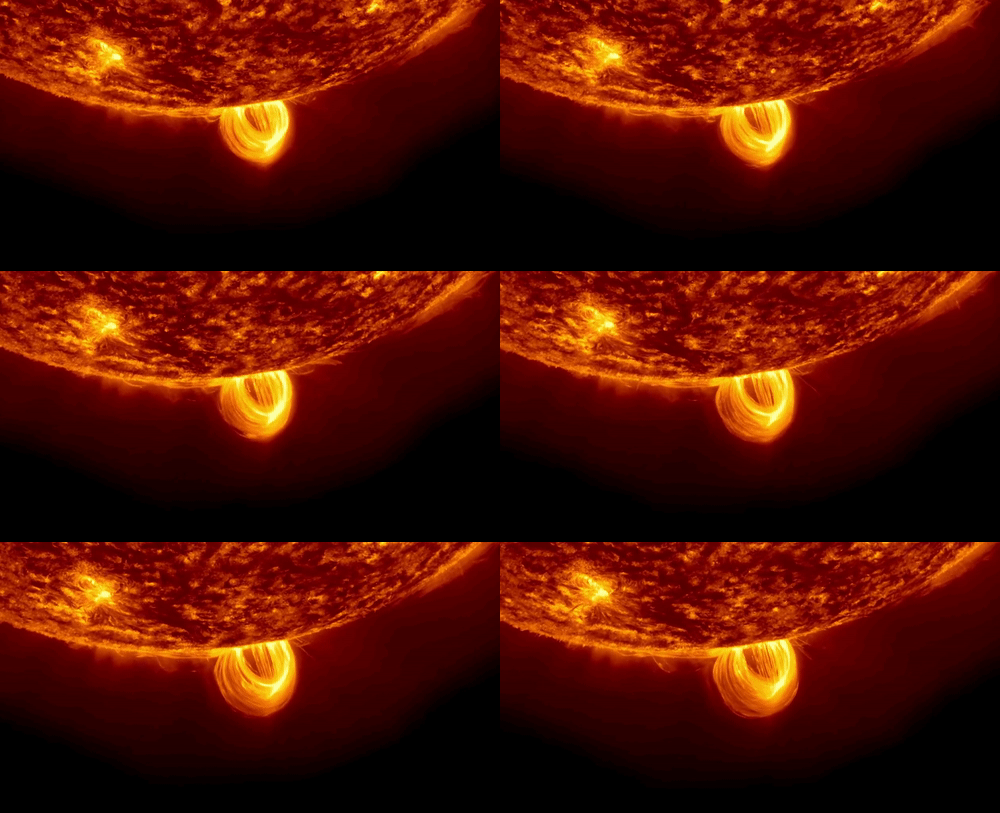
The Sun is a ball of gas and plasma - around 91% of it is hydrogen gas. Under intense heat and gravitational force this is fused into helium during nuclear fusion.
When the plasma is heated to the temperatures seen on the Sun, it contains so much energy that the charged particles can escape the star's gravity and blow out into space. This is called solar wind - under certain conditions, when it hits Earth's atmosphere it can cause auroras, such as the Northern Lights.
Where is the Sun in the Milky Way?
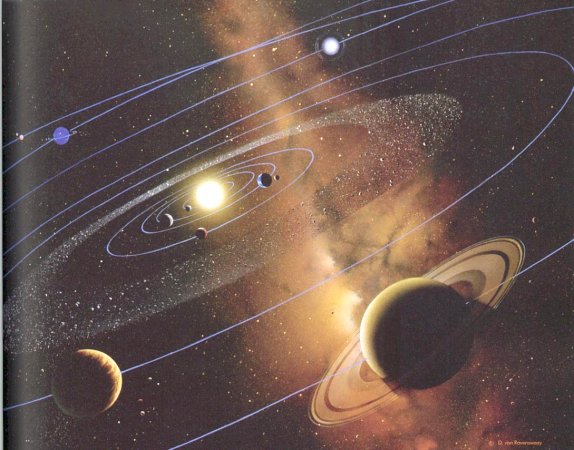
The Sun is in a spiral arm of the Milky Way called the Orion Spur. This branches off from the galaxy's Sagittarius arm. The Sun and our solar system are orbiting around the centre of the Milky Way at a speed of 720,000 kilometres per hour. It takes 230 million years to make one complete orbit.
How do we study the Sun?
Aditya-L1
India's first mission to study the Sun, Aditya-L1, reached its final destination in January 2024. It's located at a Lagrange point (L1), which is the point between the Earth and the Sun where their gravitational forces cancel each other out. The spacecraft's instruments are designed to observe the Sun's atmosphere, especially the corona and chromosphere.
Learn More
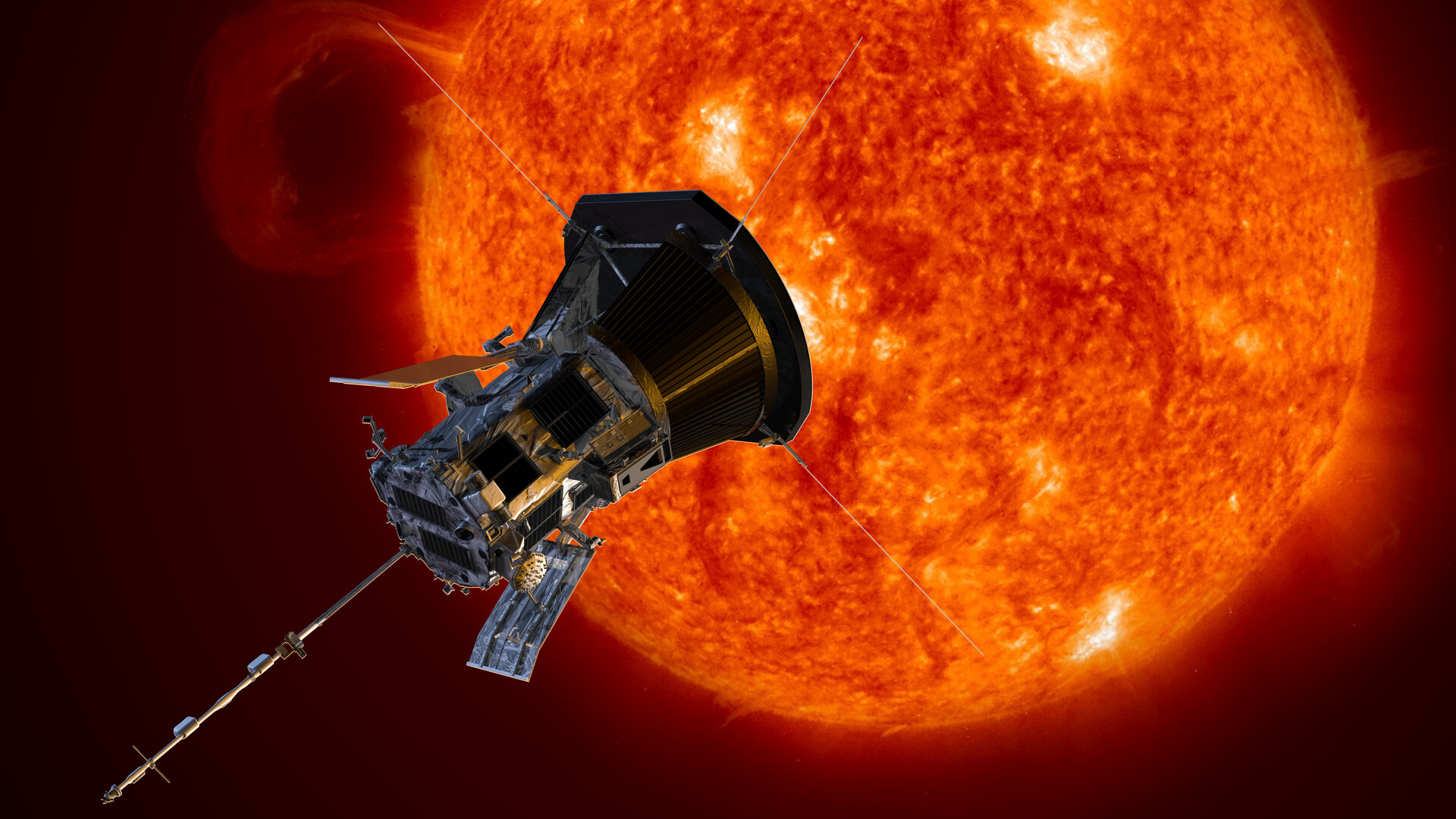
Parker Solar Probe
NASA's Parker Solar Probe studies the Sun from closer than any other spacecraft. In 2021, it became the first spacecraft to fly through the Sun's upper atmosphere, or corona.
Learn More
More...
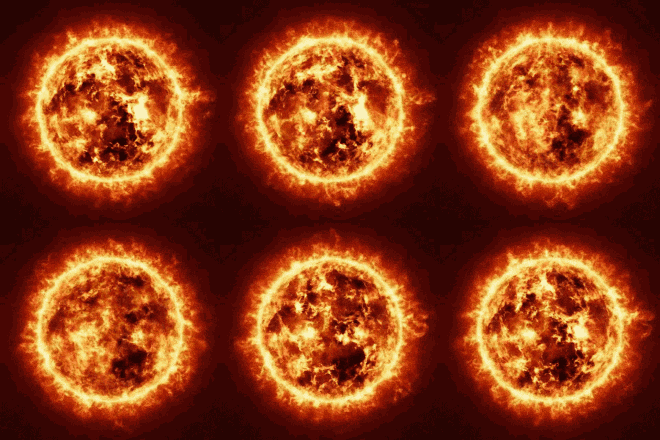
Sun
Moon
Asteroids & Comets

Planets
