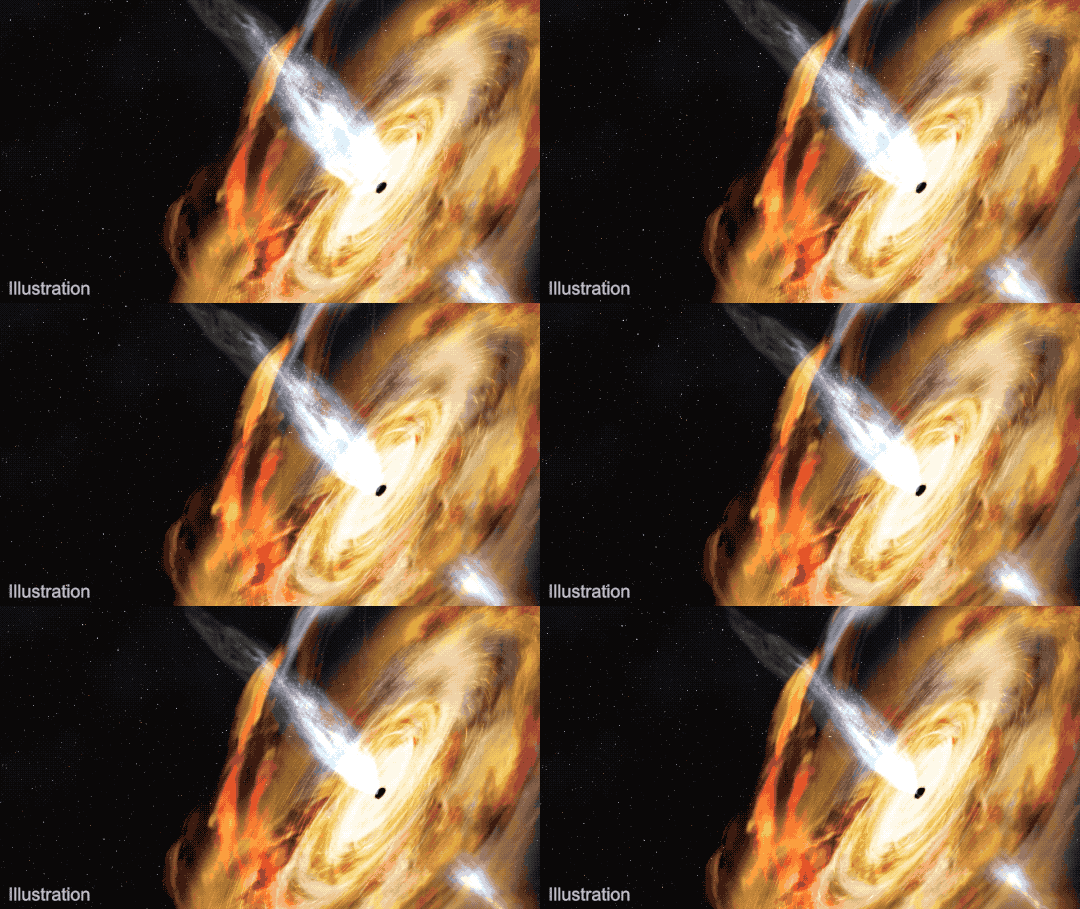
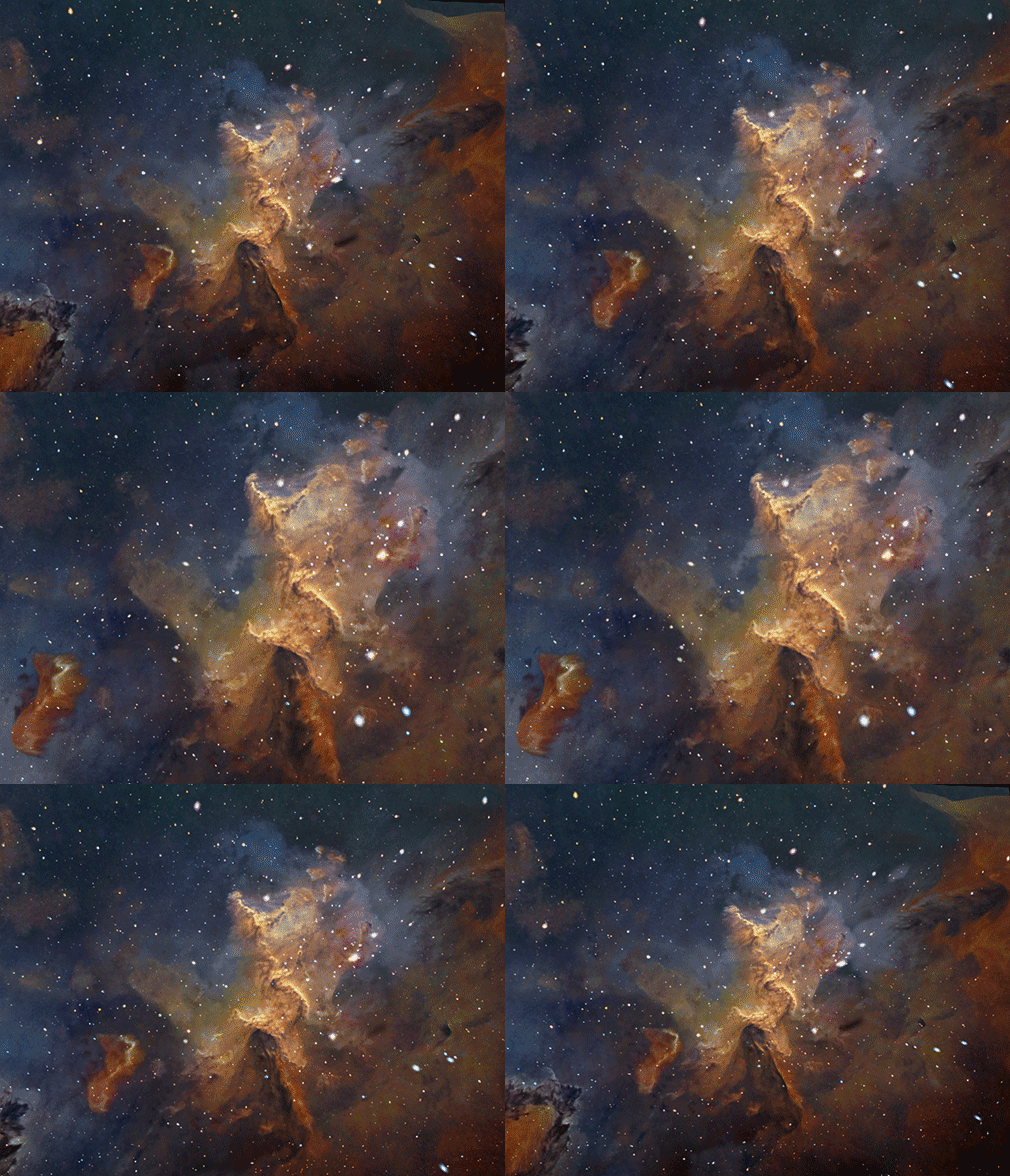
Nebulae are interstellar clouds of gas and dust. Many nebulae are formed from the remnants of dying stars. Nebulae are often also regions where new stars are born.

Nowadays, the term ‘nebula’ refers to an interstellar cloud of dust and gas. Nebulae are often formed from the remnants of dying stars: from planetary nebulae or the dispersed debris from supernova explosions. They are also often regions of intense star formation, as the rich reservoirs of dust and gas provide the necessary raw material from which new stars are born.
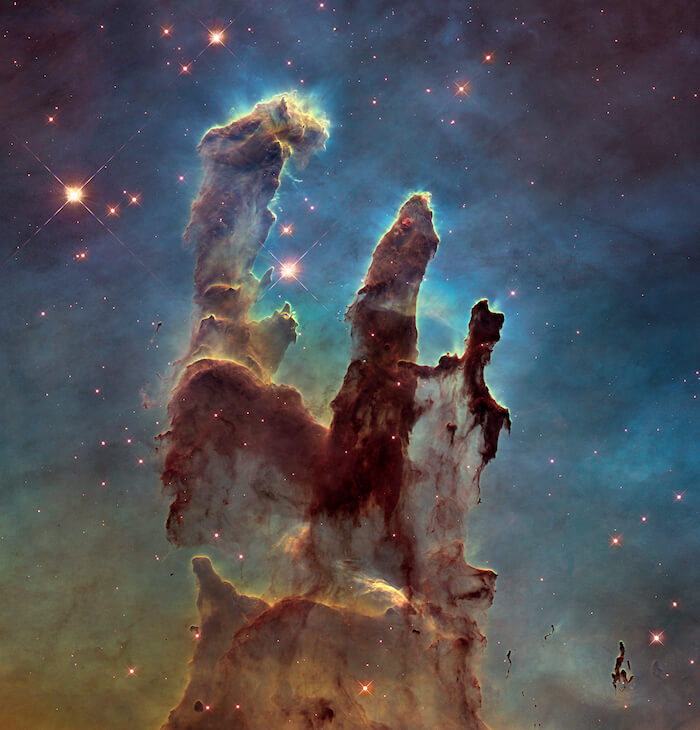
Nebulae are often mind-bogglingly big, spanning several light years in size. The word ‘nebula’ used to have a much broader meaning, referring to any celestial object that appeared to have a diffuse structure, including the objects that we now know as galaxies.
Some nebulae (more than one nebula) come from the gas and dust thrown out by the explosion of a dying star, such as a supernova. Other nebulae are regions where new stars are beginning to form. For this reason, some nebulae are called "star nurseries."
How do stars form in a nebula?
Nebulae are made of dust and gases—mostly hydrogen and helium. The dust and gases in a nebula are very spread out, but gravity can slowly begin to pull together clumps of dust and gas. As these clumps get bigger and bigger, their gravity gets stronger and stronger.
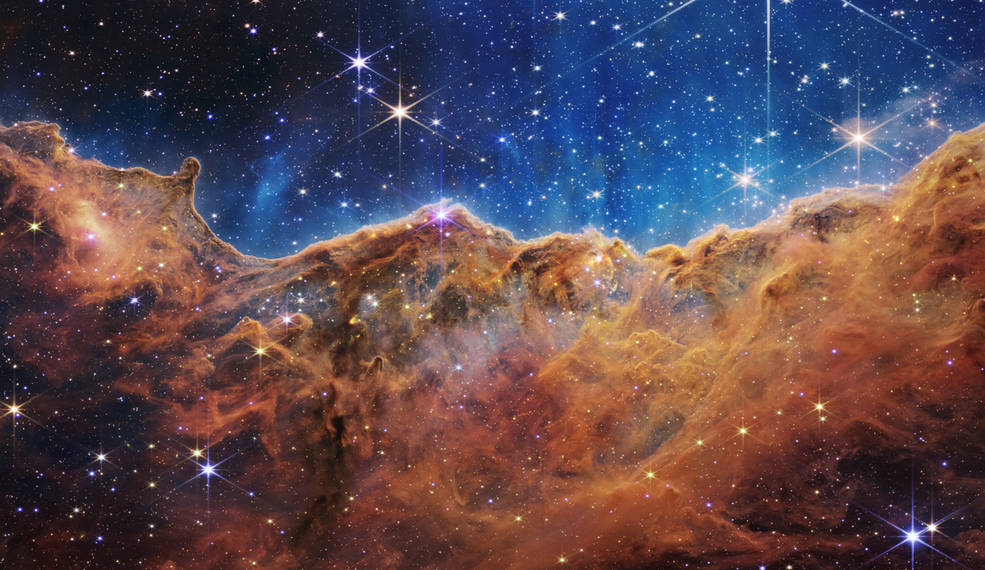
Eventually, the clump of dust and gas gets so big that it collapses from its own gravity. The collapse causes the material at the center of the cloud to heat up-and this hot core is the beginning of a star.
Where are nebulae?

Nebulae exist in the space between the stars—also known as interstellar space. The closest known nebula to Earth is called the Helix Nebula. It is the remnant of a dying star—possibly one like the Sun.
It is approximately 700 light-years away from Earth. That means even if you could travel at the speed of light, it would still take you 700 years to get there!
Did you know?
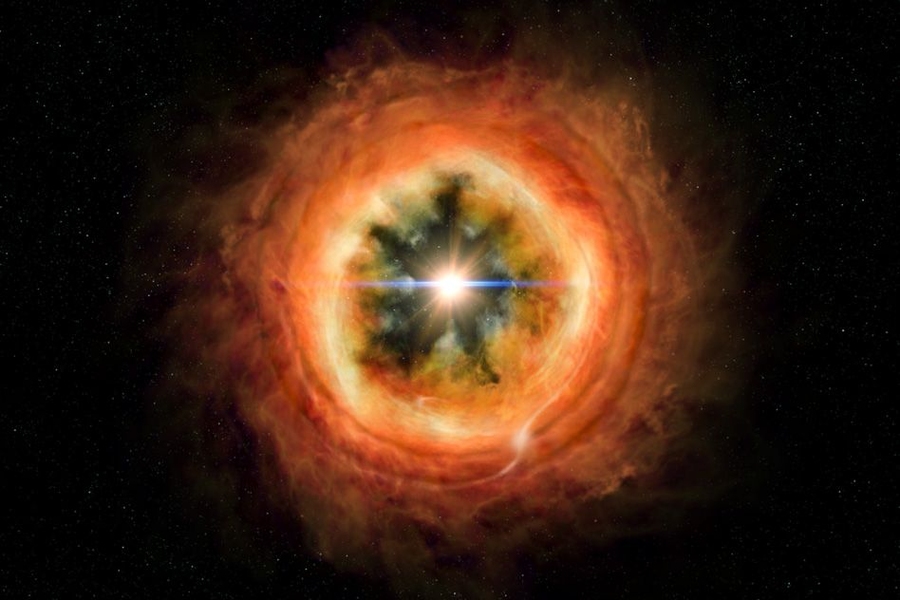
Our Sun got its start in a stellar nursery? Over 4.5 billion years ago, some gas and dust in a nebula clumped together due to gravity, and a baby Sun was born. The process to form a baby star itself can take a million years or more!
Since the Sun will live so much longer than us, scientists can’t observe its whole life cycle directly … but they can study tons of other stars and nebulae at different phases of their lives and draw conclusions about where our Sun came from and where it’s headed. While studying nebulae, we’re seeing the past, present, and future of our Sun and trillions of others like it in the cosmos.
More...
Galaxies
Nebulae