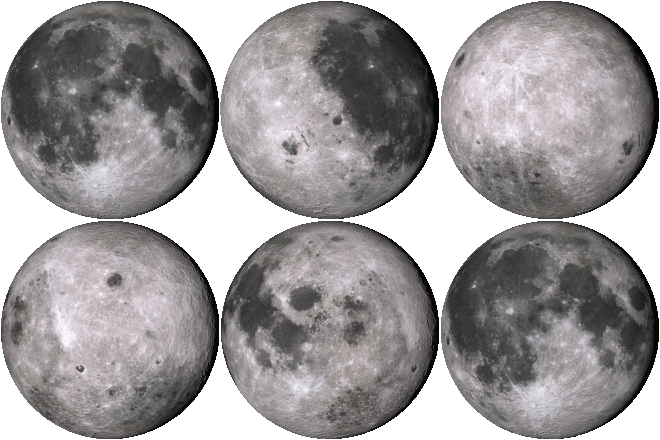
The Moon is one of the most recognisable objects in the solar system. This proximity to Earth has given it immeasurable cultural significance and means it plays a key role in Earth's tides.
The Moon doesn't give off its own light, rather reflects that of the Sun.
The Moon facts
- Equator circumference: 10,917km
- Radius: 1,737km
- Temperature: -173°C to 127°C
- Average orbital speed: 3,683km/h (1.02km/s)
- Average distance from Earth: 384,400 kilometres
- Day length: 27 days
How big is the Moon?

The Moon is a little over a quarter the size of the Earth, with a circumference of 10,917 kilometres around the equator and a radius (the distance from the core of the Moon to the surface) of just 1,737 kilometres.
How cold is the Moon?

There is almost no atmosphere on the Moon, which means it cannot trap heat or insulate the surface.
In full sunshine, temperatures on the Moon reach 127°C, way above boiling point. There are 13 and a half days of high temperatures followed by 13 and a half days of darkness, and once the Sun goes down the temperature at the bottom of craters can plummet to -173°C.
Is there water on the Moon?
/https://tf-cmsv2-smithsonianmag-media.s3.amazonaws.com/filer/81/5f/815f9736-3f19-4eb5-a6af-8b61b6839dbc/psr-image.jpg)
Due to its tilt, some parts of the Moon's surface never see sunlight, allowing water ice to survive in some of its craters. When India's Chandrayaan-1 lunar orbiter passed over the north pole of the Moon in 2009 it found more than 40 craters thought to contain water ice. This confirmed a finding from the previous year that found water ice on the southern pole. In addition, the Moon contains some water trapped in its rocks.
What is the Moon made of?

The Moon is primarily made of rock and is composed of elements like oxygen, silicon, magnesium, iron, calcium, aluminum, and smaller amounts of other elements.
Its internal structure is similar to Earth's, with a core, mantle, and crust. The core is believed to be mostly iron, while the mantle is composed of rock-forming minerals. The crust is the outermost layer, and it's covered in a layer of dust and debris known as regolith.
How many times have people landed on the Moon?

All six human Moon landings to date have been part of NASA's Apollo programme, which ran between 1961 and 1972.
After the momentous achievement of Apollo 11, landing Neil Armstrong and Buzz Aldrin on the Moon on 20 July 1969, the USA landed five more missions up to 1972. Twelve people in total have walked on the surface of the Moon. During these missions, the astronauts collected samples, conducted science experiments, explored the landscape in a buggy and even played golf.
Since then, no one has been back to the Moon, however, NASA plans to place humans on the lunar surface again with the launch of Artemis III in 2025.
Chandrayaan-3 Mission : ISRO
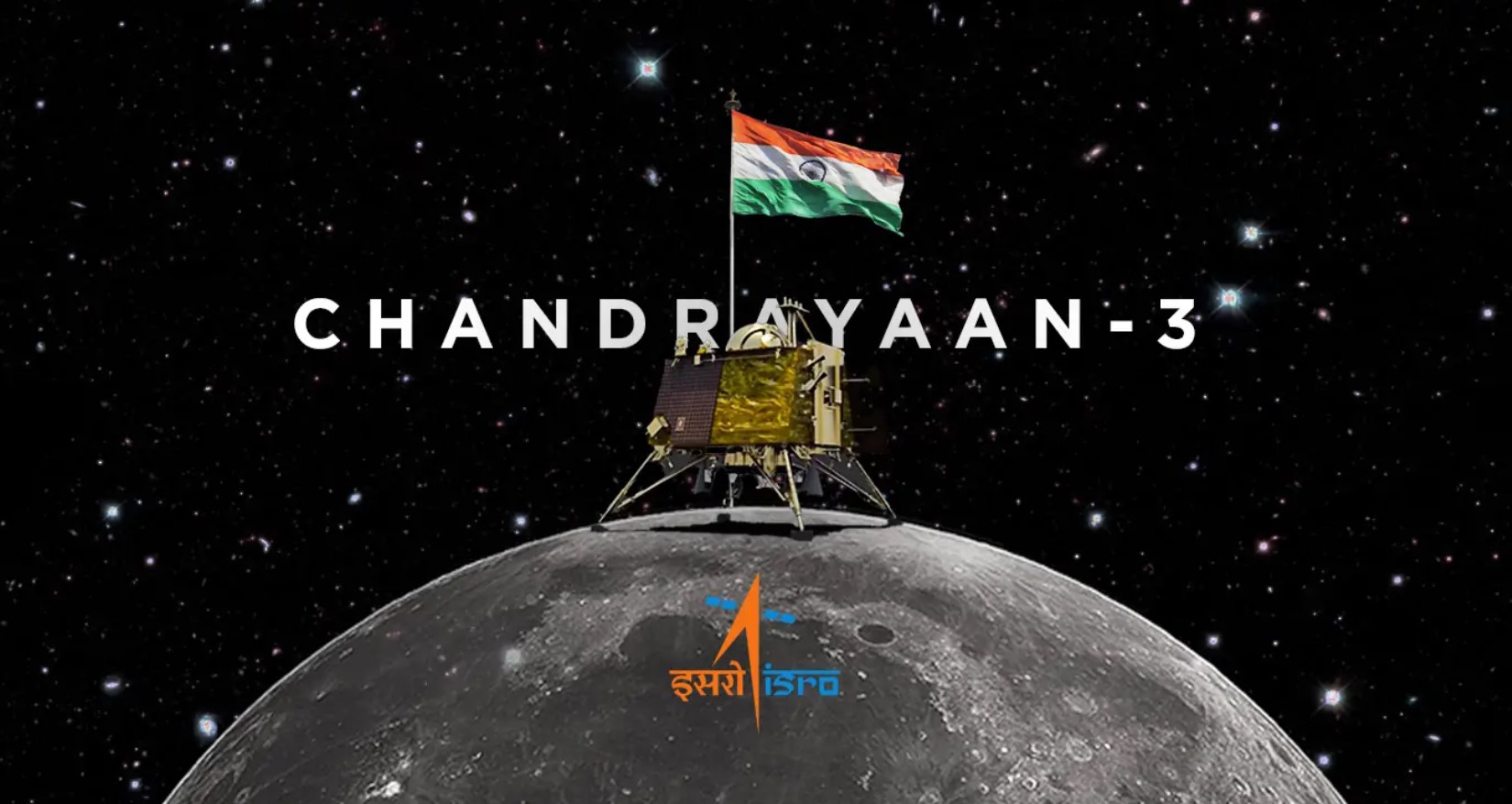
India's Triumph on the Moon
Chandrayaan-3, India's third lunar mission, marked a historic milestone in the country's space exploration journey. Successfully landing on the Moon's south pole on August 23, 2023, India became the fourth nation to achieve this feat, joining the United States, Russia, and China.
Learn More
The Significance of the Lunar South Pole
The choice of the lunar south pole for Chandrayaan-3's landing was strategic. This region is believed to harbor water ice in permanently shadowed craters, which could be crucial for future lunar missions and potential human settlements. Water ice can be used for drinking, oxygen production, and rocket fuel.
More...
Sun
Moon
Asteroids & Comets

Planets
