Asteroids: The Rocky Remnants of Our Solar System
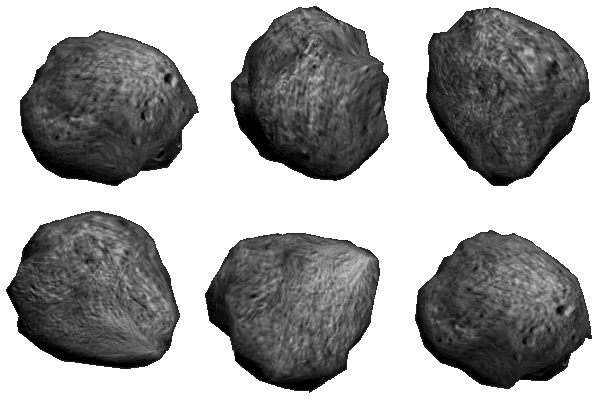
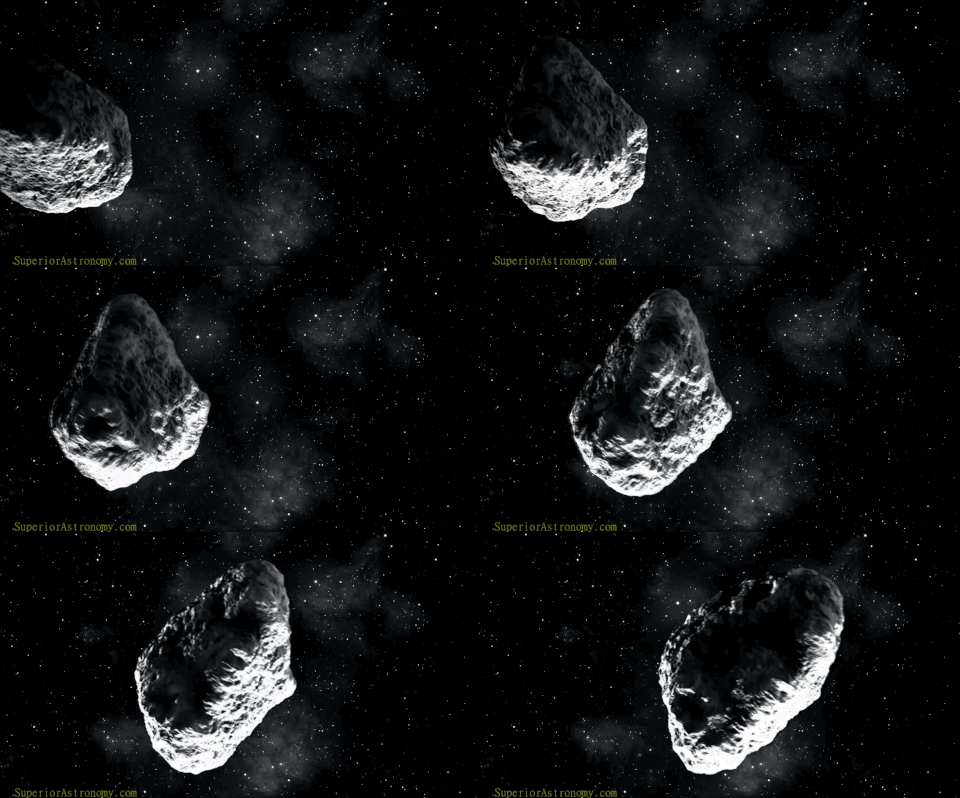
Asteroids come in a variety of shapes and sizes and teach us about the formation of the solar system.
Asteroids are the rocky remnants of material leftover from the formation of the solar system and its planets approximately 4.6 billion years ago. The majority of asteroids originate from the main asteroid belt located between Mars and Jupiter, according to NASA. NASA's current asteroid count is over 1 million.
Asteroids orbit the sun in highly flattened, or "elliptical" circles, often rotating erratically, tumbling and falling through space.
Formation and Origins

The prevailing theory suggests that asteroids are the remnants of a failed planet that never fully formed in the early days of our solar system. As the Sun and planets were forming, gravitational interactions between the larger bodies disrupted the formation of a planet in the asteroid belt, leaving behind a collection of smaller rocky fragments.
The Asteroid Belt

The main concentration of asteroids is found in the asteroid belt between the orbits of Mars and Jupiter.
This region is home to millions of asteroids, ranging from tiny pebbles to objects larger than some moons. The asteroid belt is so vast that if all the asteroids were combined, they would form a planet only about half the size of the Moon.
The Threat of Asteroid Impacts
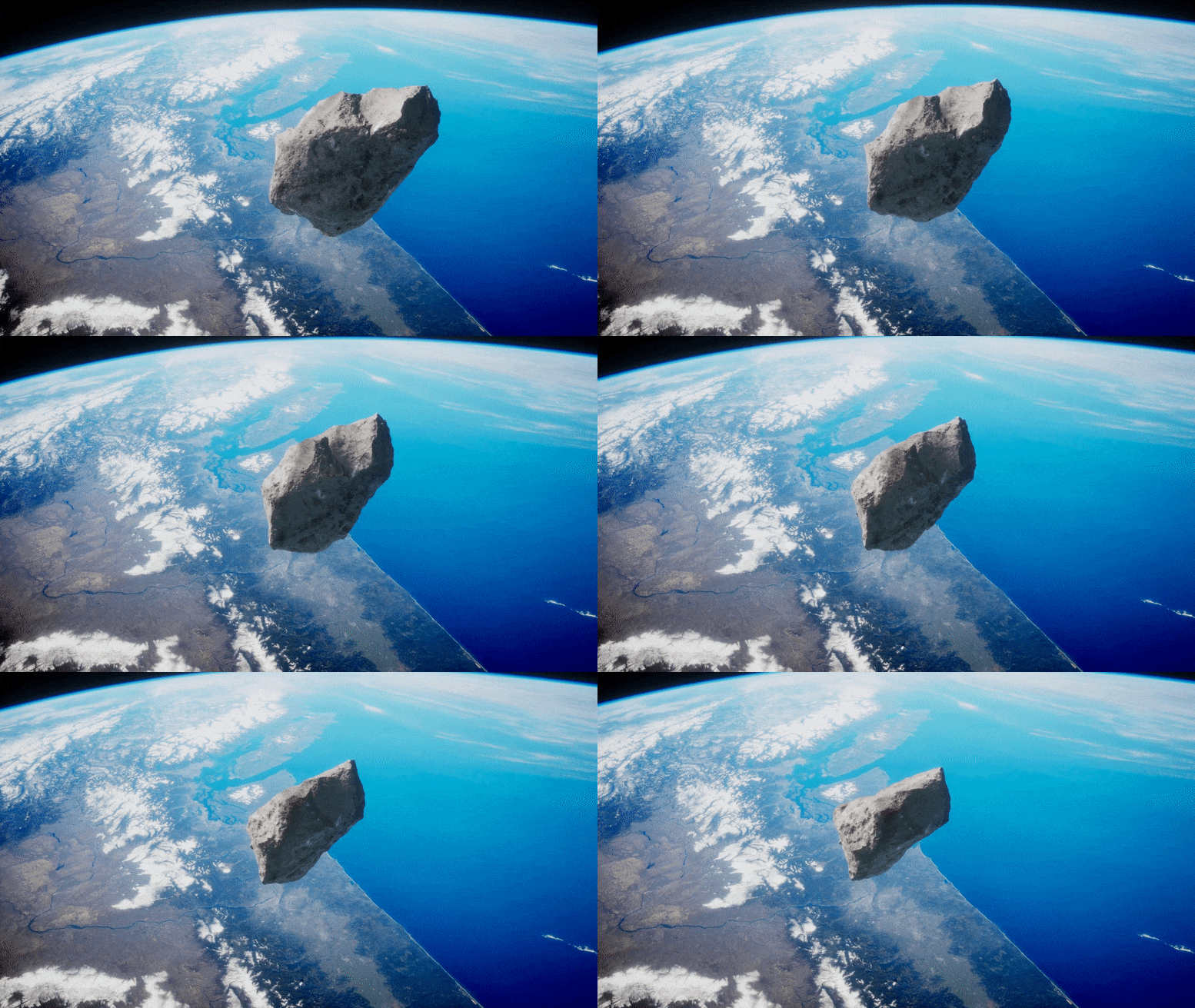
Asteroid impacts have played a significant role in Earth's history. Evidence suggests that a large asteroid impact may have contributed to the extinction of the dinosaurs millions of years ago.Today, scientists are constantly monitoring NEAs to identify potential threats and develop strategies to deflect them if necessary.
Asteroids are fascinating objects that offer a window into the early history of our solar system. While they may pose a potential threat to Earth, they also hold promise for future exploration and resource utilization. As our understanding of asteroids continues to grow, we can better appreciate their role in the grand cosmic tapestry.
Comets: Celestial Snowballs

Comets, often referred to as " dirty snowballs," are small celestial bodies composed primarily of ice, dust, and rock. They originate in the outer reaches of our solar system, in the Kuiper Belt and the Oort Cloud, and make periodic journeys into the inner solar system. When a comet approaches the Sun, its icy core begins to vaporize, releasing a tail of gas and dust that can be seen from Earth.
Formation and Origins

Comets are thought to have formed during the early stages of the solar system. As the Sun and planets were forming, leftover material was pushed to the outer edges of the solar system, forming the Kuiper Belt and Oort Cloud. These regions are home to billions of comets, which remain frozen until they are disturbed by gravitational interactions with planets or other celestial bodies.
Comets and Earth

While most comets pose no threat to Earth, there is always the possibility of a collision. In the past, comet impacts have likely played a significant role in Earth's history. For example, some scientists believe that a multiple comet impact may have contributed to the extinction of the dinosaurs.
Comparison to Asteroids

- Composition:
- Comets are primarily composed of ice, dust, and rock, while asteroids are primarily composed of rock and metal.
- Origin:
- Comets originate in the outer solar system, while asteroids are concentrated in the asteroid belt between Mars and Jupiter.
- Appearance:
- Comets often have tails of gas and dust, while asteroids do not.
- Orbit:
- Comets typically have elliptical orbits, while asteroids tend to have more circular orbits.
More...
Sun
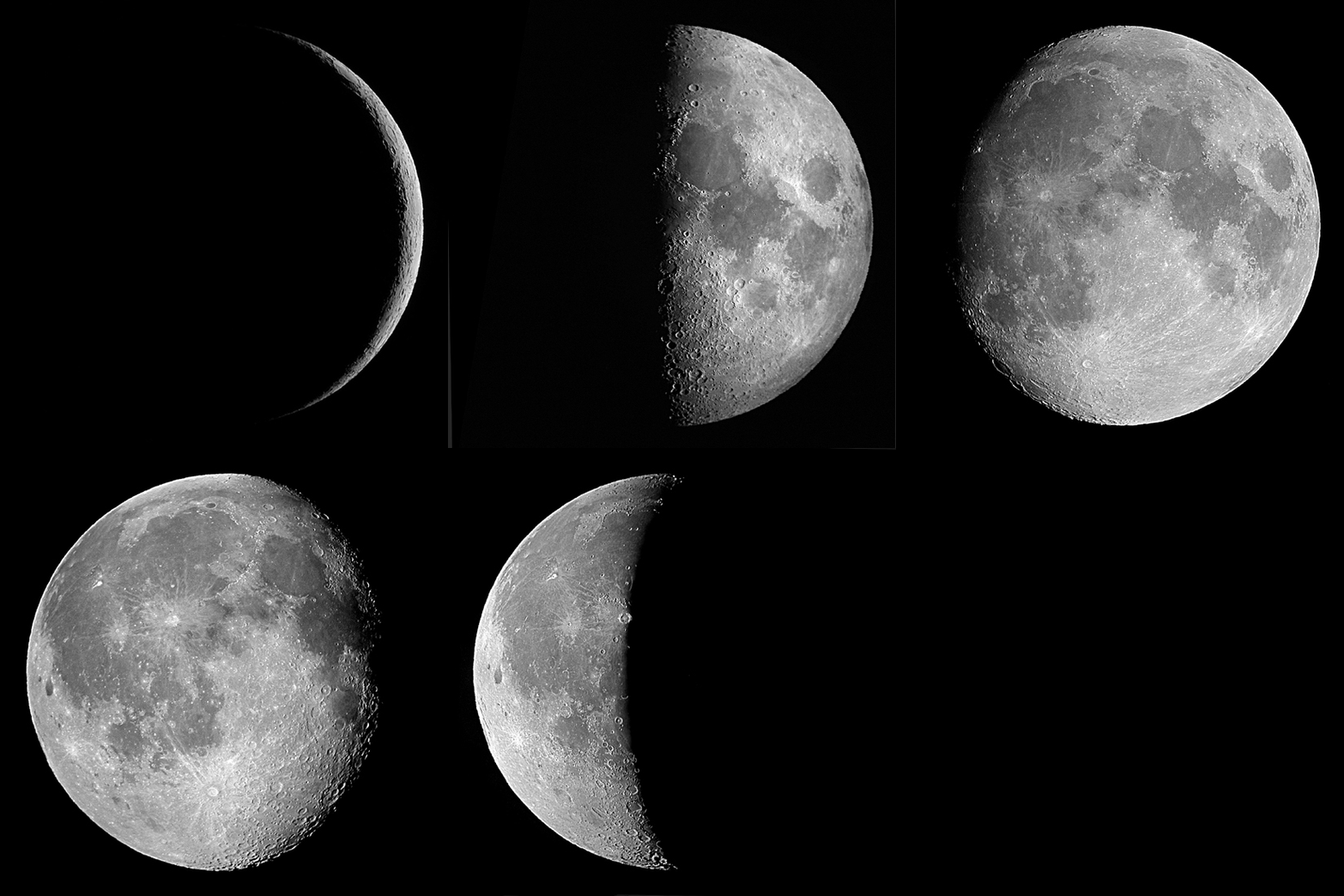
Moon
Asteroids & Comets

Planets
