The Eight Planets of Our Solar System
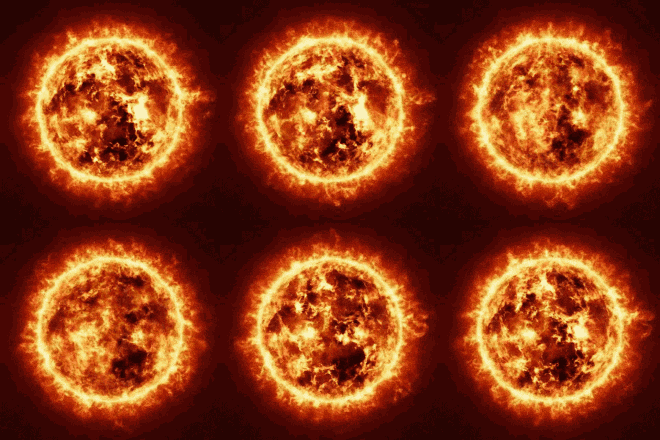
Our solar system is a vast expanse of celestial bodies, each with its unique characteristics. At its heart lies the Sun, a massive star that provides energy and light to the planets that orbit it. Around the Sun, eight planets revolve, each with its own distinct features and composition.
⩥ Inner Planets (Terrestrial Planets)
The inner planets, also known as terrestrial planets, are rocky, Earth-like worlds closest to the Sun. They are smaller and denser than the outer planets and lack rings or moons.
1.)Mercury
Mercury is the closest planet to the Sun. It is a small, rocky world with a heavily cratered surface. Mercury has no atmosphere and experiences extreme temperature variations, with daytime temperatures reaching scorching highs and nighttime temperatures plunging to frigid lows.
Some facts:
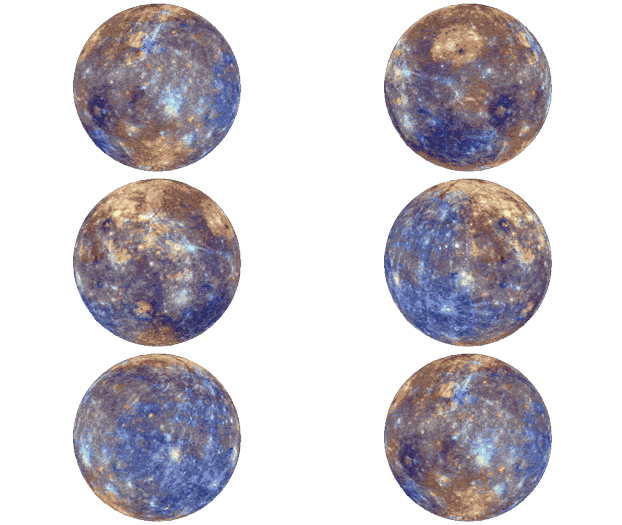
- • Equator circumference:
- 15,329km
- • Radius:
- 2,440km
- • Average distance from Sun:
- 58 Million Km
- • Surface temperature:
- -180°C to 430°C
- • Day length:
- 59 Earth days
- • Year length:
- 88 Earth days
- • Average orbital speed:
- 170,500km/h (47km/s)
2.) Venus
Venus is often referred to as Earth's twin due to its similar size and composition. However, Venus is a hostile environment with a thick atmosphere composed primarily of carbon dioxide, which traps heat and causes extreme temperatures. Venus has no moons.
Some facts:

- • Equator circumference
- 38,025km
- • Radius
- 6,052km
- • Average distance from Sun
- 108 million km
- • Surface temperature
- 462°C
- • Average orbital speed
- 126,074km/h (35km/s)
- • Sidereal day length
- 243 Earth days
- • Solar day length
- 117 Earth days
- • Year length
- 225 Earth days
3.)Earth
Earth is the only planet known to support life. It is the third planet from the Sun and has a unique combination of factors that make it habitable, including a suitable atmosphere, liquid water, and a stable climate. Earth has one moon.
Some facts:

- • Equator circumference:
- 40,075 km
- • Radius:
- 6,371 km
- • Average distance from Sun:
- 149.6 million km
- • Surface temperature:
- Varies widely, with an average of around 15 degrees Celsius (59 degrees Fahrenheit)
- • Average orbital speed:
- Approximately 107,200 kilometers per hour (30 kilometers per second)
- • Sidereal day length:
- Approximately 23 hours, 56 minutes, and 4 seconds
- • Solar day length:
- Approximately 24 hours
- • Year length:
- Approximately 365.25 days
4.)Mars
Mars is a cold, desert planet with a reddish hue due to the presence of iron oxide. It has a thin atmosphere composed primarily of carbon dioxide. Mars has two small moons, Phobos and Deimos.
Some facts:
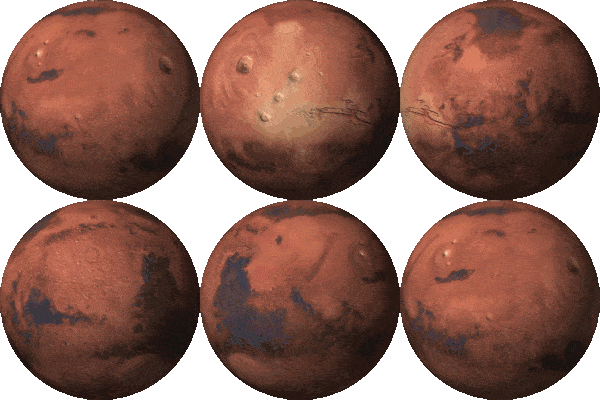
- • Equator circumference:
- 21,344 km
- • Radius:
- 3,389.5 km
- • Average distance from Sun:
- 227.9 million km
- • Surface temperature:
- Varies widely, with an average of around -63 degrees Celsius (-81 degrees Fahrenheit)
- • Average orbital speed:
- Approximately 86,800 kilometers per hour (24 kilometers per second)
- • Sidereal day length:
- Approximately 24 hours, 37 minutes, and 22 seconds
- • Solar day length:
- Approximately 24 hours, 40 minutes, and 55 seconds
- • Year length:
- 1.88 Earth years
⩥ Outer Planets (Gas Giants)
The outer planets, also known as gas giants, are much larger than the inner planets and are composed primarily of gases like hydrogen and helium. They have thick atmospheres and numerous moons.
5.)Jupiter
Jupiter is the largest planet in our solar system. It is a gas giant with a swirling atmosphere of colorful bands. Jupiter has a Great Red Spot, a massive storm that has been raging for centuries. It has 80 known moons, including the four largest, known as the Galilean moons.
Some facts:
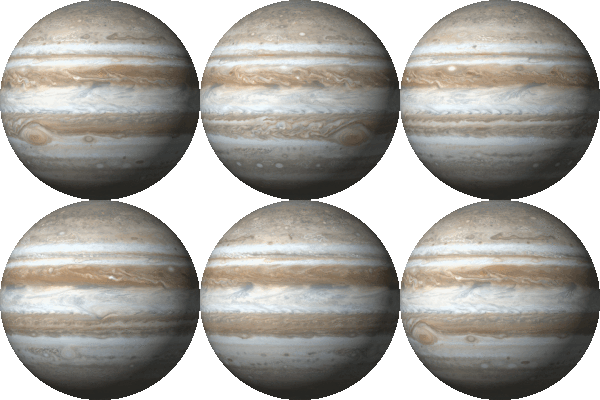
- • Equator circumference:
- 439,820 km
- • Radius:
- 69,911 km
- • Average distance from Sun:
- 778.5 million km
- • Surface temperature:
- Varies widely, with an average of around -145 degrees Celsius (-231 degrees Fahrenheit)
- • Average orbital speed:
- Approximately 43,400 kilometers per hour (12 kilometers per second)
- • Sidereal day length:
- Approximately 9 hours, 55 minutes, and 29.6 seconds
- • Solar day length:
- Approximately 9 hours, 55 minutes, and 29.6 seconds
- • Year length:
- 11.86 Earth years
6.)Saturn
Saturn is famous for its prominent rings, which are composed of icy particles. It is a gas giant with a similar composition to Jupiter but is less dense. Saturn has 83 known moons, including Titan, its largest moon.
Some facts:
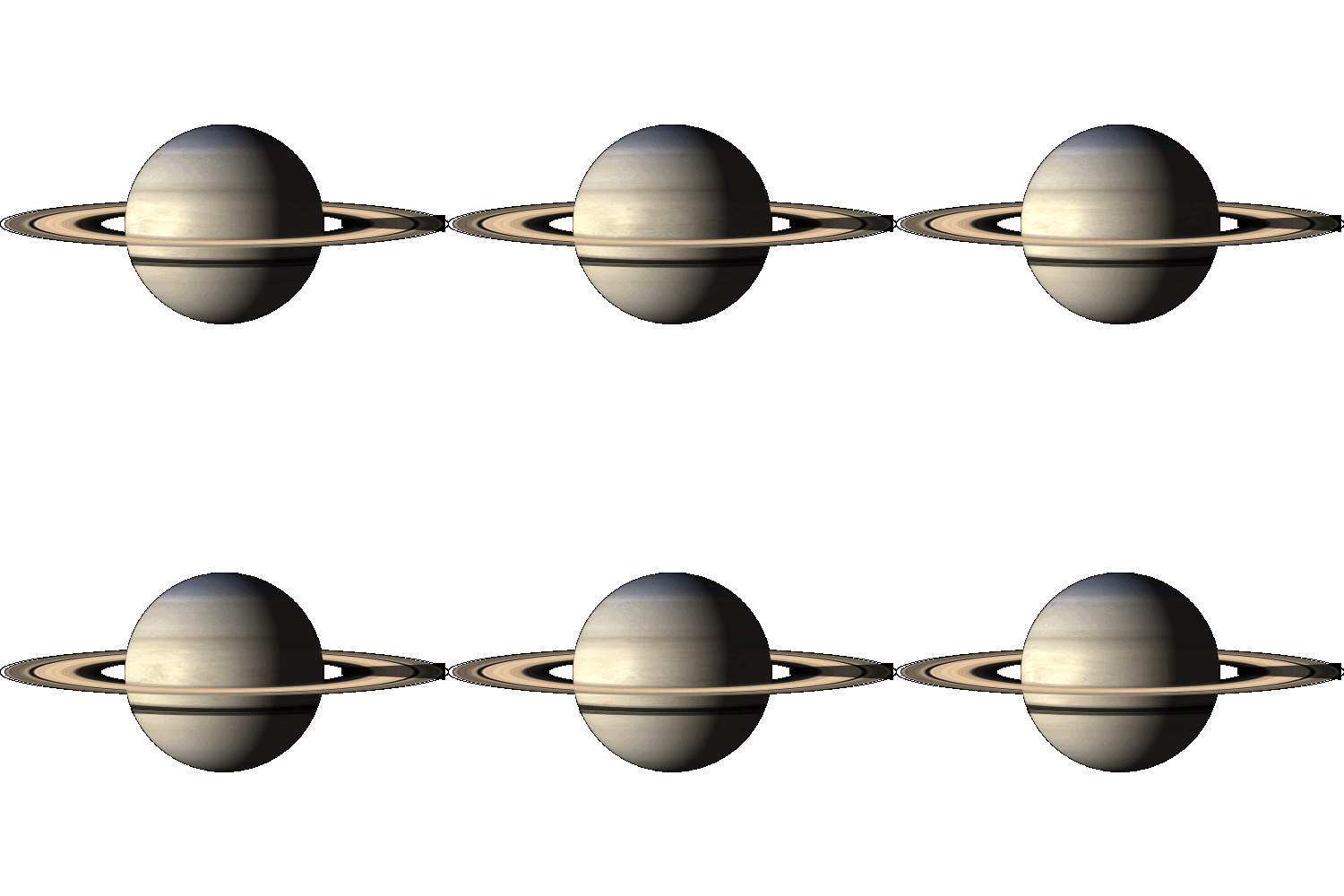
- • Equator circumference:
- 365,882 km
- • Radius:
- 58,232 km
- • Average distance from Sun:
- 1.43 billion km
- • Surface temperature:
- Varies widely, with an average of around -180 degrees Celsius (-292 degrees Fahrenheit)
- • Average orbital speed:
- Approximately 35,500 kilometers per hour (10 kilometers per second)
- • Sidereal day length:
- Approximately 10 hours, 33 minutes, and 38 seconds
- • Solar day length:
- Approximately 10 hours, 45 minutes, and 40 seconds
- • Year length:
- 29.46 Earth years
7.)Uranus
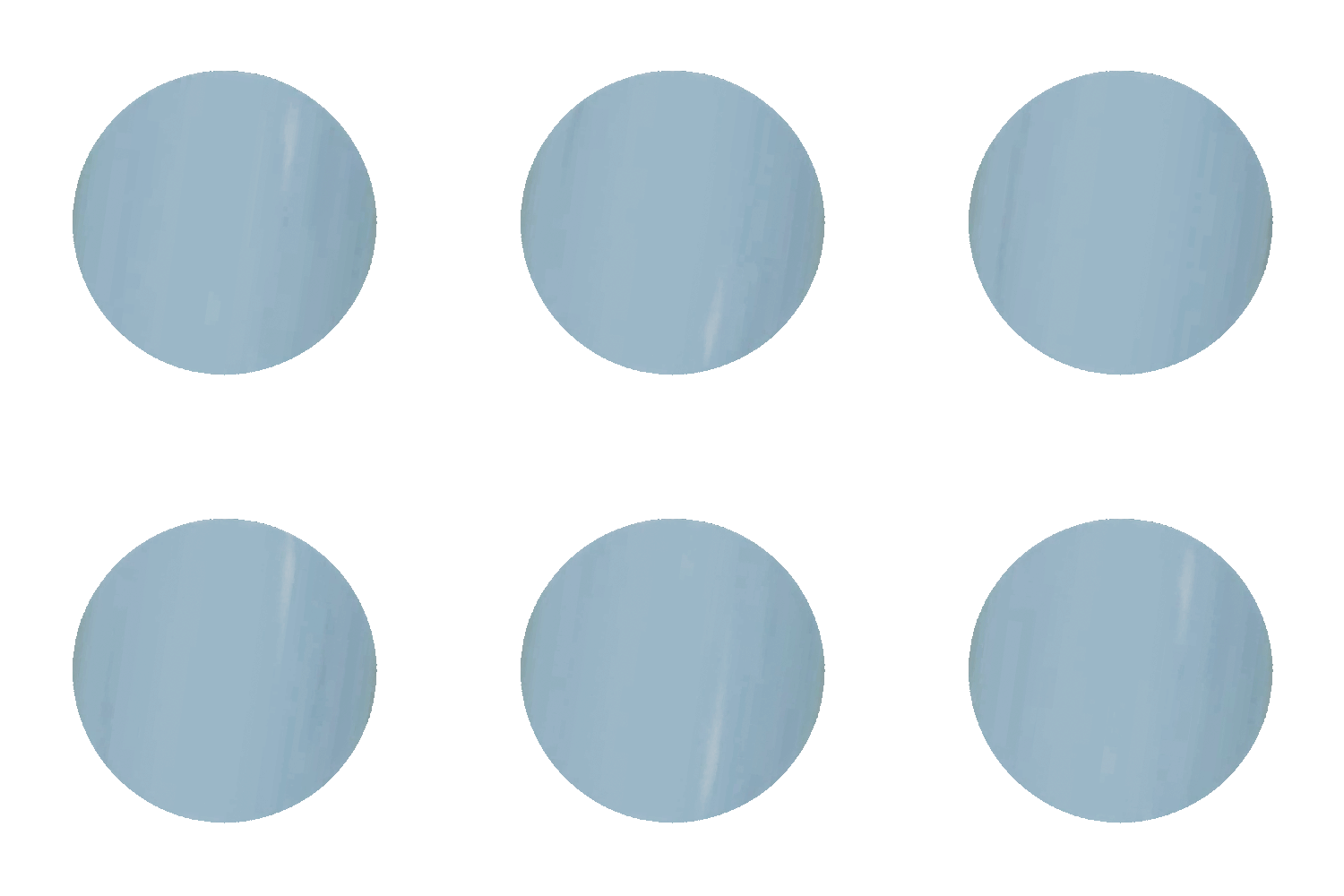
Uranus is a gas giant that rotates on its side, giving it a unique appearance. It has a pale blue color due to the presence of methane in its atmosphere. Uranus has 27 known moons.
Some facts:
- • Equator circumference:
- 157,120 km
- • Radius:
- 25,362 km
- • Average distance from Sun:
- 2.87 billion km
- • Surface temperature:
- Varies widely, with an average of around -216 degrees Celsius (-357 degrees Fahrenheit)
- • Average orbital speed:
- Approximately 24,600 kilometers per hour (7 kilometers per second)
- • Sidereal day length:
- Approximately 17 hours, 14 minutes, and 24 seconds
- • Solar day length:
- Approximately 17 hours, 14 minutes, and 24 seconds
- • Year length:
- 84.01 Earth years
8.)Neptune
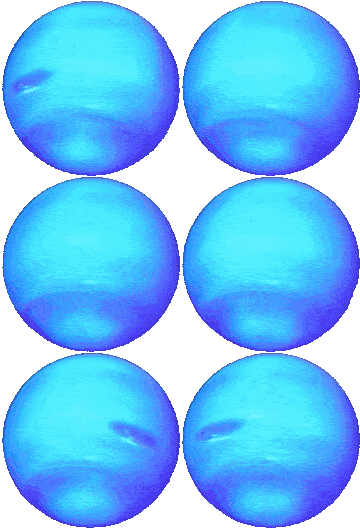
Neptune is the farthest planet from the Sun and is a deep blue color due to the presence of methane in its atmosphere. It is a gas giant with a similar composition to Uranus. Neptune has 14 known moons.
Some facts:
- • Equator circumference:
- 152,994 km
- • Radius:
- 24,622 km
- • Average distance from Sun:
- 4.5 billion km
- • Surface temperature:
- Varies widely, with an average of around -220 degrees Celsius (-364 degrees Fahrenheit)
- • Average orbital speed:
- Approximately 23,700 kilometers per hour (6.6 kilometers per second)
- • Sidereal day length:
- Approximately 16 hours, 6 minutes, and 35 seconds
- • Solar day length:
- Approximately 16 hours, 6 minutes, and 35 seconds
- • Year length:
- 164.8 Earth years
Conclusion
The eight planets of our solar system offer a diverse range of environments, each with its own unique characteristics. From the rocky inner planets to the gaseous outer planets, these celestial bodies continue to fascinate scientists and inspire exploration.
More...
Sun
Moon
Asteroids & Comets
Planets
